


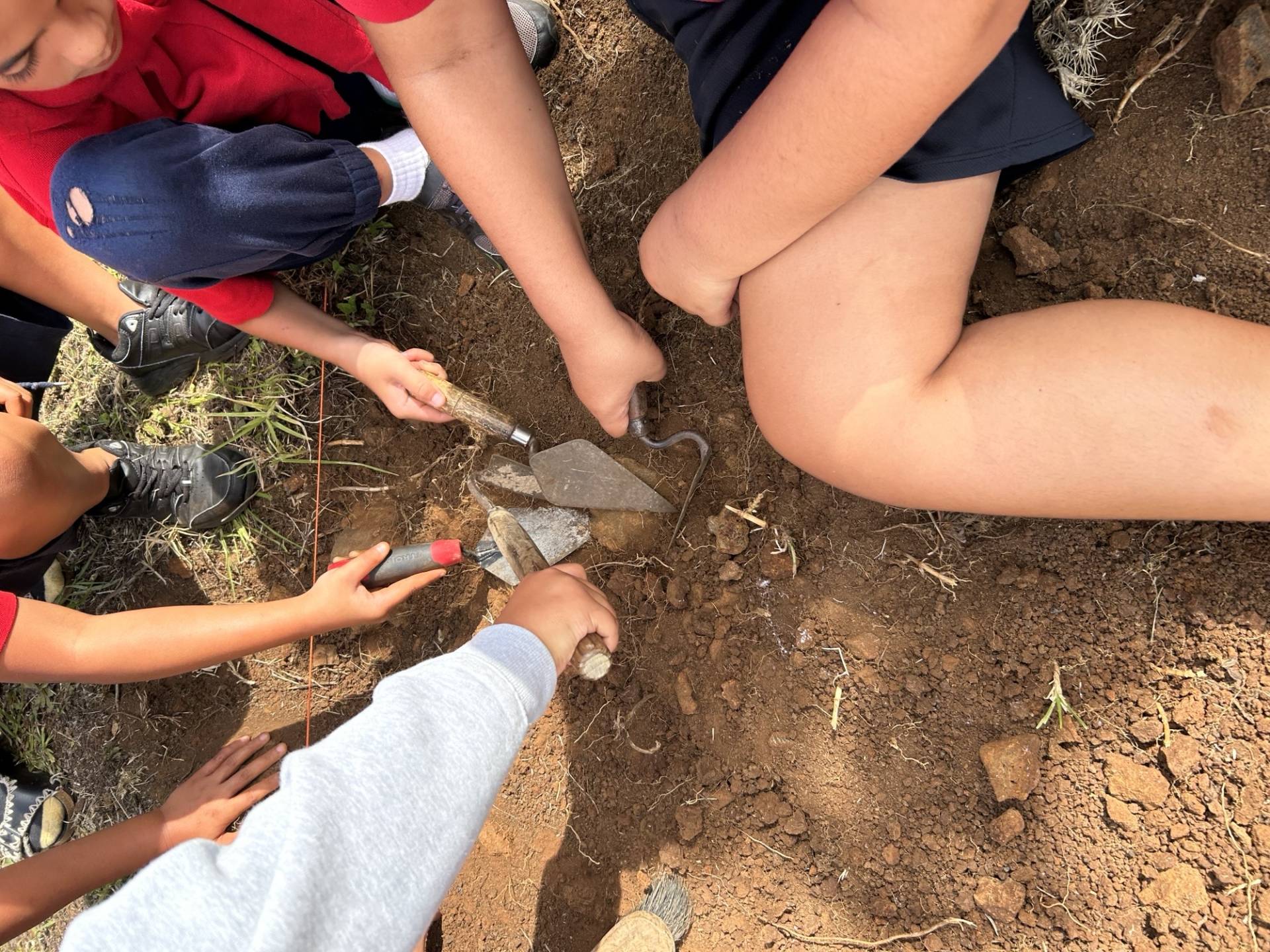
For the past six years, the Kāinga Ora Roskill Development has worked closely with May Road School to help students learn about the history of their local area and build a strong connection to place during the neighbourhood redevelopment.
As part of this journey, students have proudly taken on the role of Kaitiaki (guardians) for ancient taonga discovered on a vacant Kāinga Ora site near their school and Puketaapapa Maunga (Mount Roskill), also known as Pukewīwī. With guidance from Mana Whenua, community leaders and Kāinga Ora archaeologist Dr Hans‑Dieter Bader, students have been learning how history is uncovered, protected and shared.
Working on behalf of the Tūpuna Maunga Authority (TMA), the students are now researching the maunga that overlooks their school and features in their logo. Kāinga Ora gave permission for the students to access and use the vacant site where the original taonga were found, allowing them to continue their research safely and respectfully. From here, they can clearly see evidence of ancient gardens and lava rock structures on the maunga above.
Their learning has included exploring rare artefacts uncovered on their school grounds more than 100 years ago, including moa gizzards, adze heads and bones—the only significant archaeological finds recorded across all of Puketaapapa.
Students have loved getting hands‑on, using tools like soil testing kits, 3D mapping, drones and site surveys to explore historic kūmara pits and pātaka kai still present on the maunga today.
As the project comes to a close, students are preparing for visits to Auckland Museum and Roskill Library, before sharing what they’ve learned with TMA and the wider community at Matariki, during Manu Aute Kite Day on the maunga in early July.
Kāinga Ora is incredibly proud to have been on this journey with May Road School. The students and staff show deep care and commitment to their neighbourhood and its heritage, working hard to protect and honour the stories of place.
